How a Star-Delta Forward and Reverse Starter Works
A Star-delta forward and reverse starter is a starter widely used in industrial sites. As an electrician, it is important to understand how the starter works.
The star-delta forward and reverse starter has two circuits: the power circuit and control circuit. The starter enables the electric motor to run either in the forward direction or in the reverse direction.
The star-delta forward and reverse starter is found on industrial machines that are supposed to change direction of operation regularly.
A good example of the application of the star-delta forward and reverse starter is running a conveyor belt that moves objects from one place to the other.
The forward and reverse starter enables the conveyor belt to change the direction of rotation without reconnecting the phases to the electric motor.
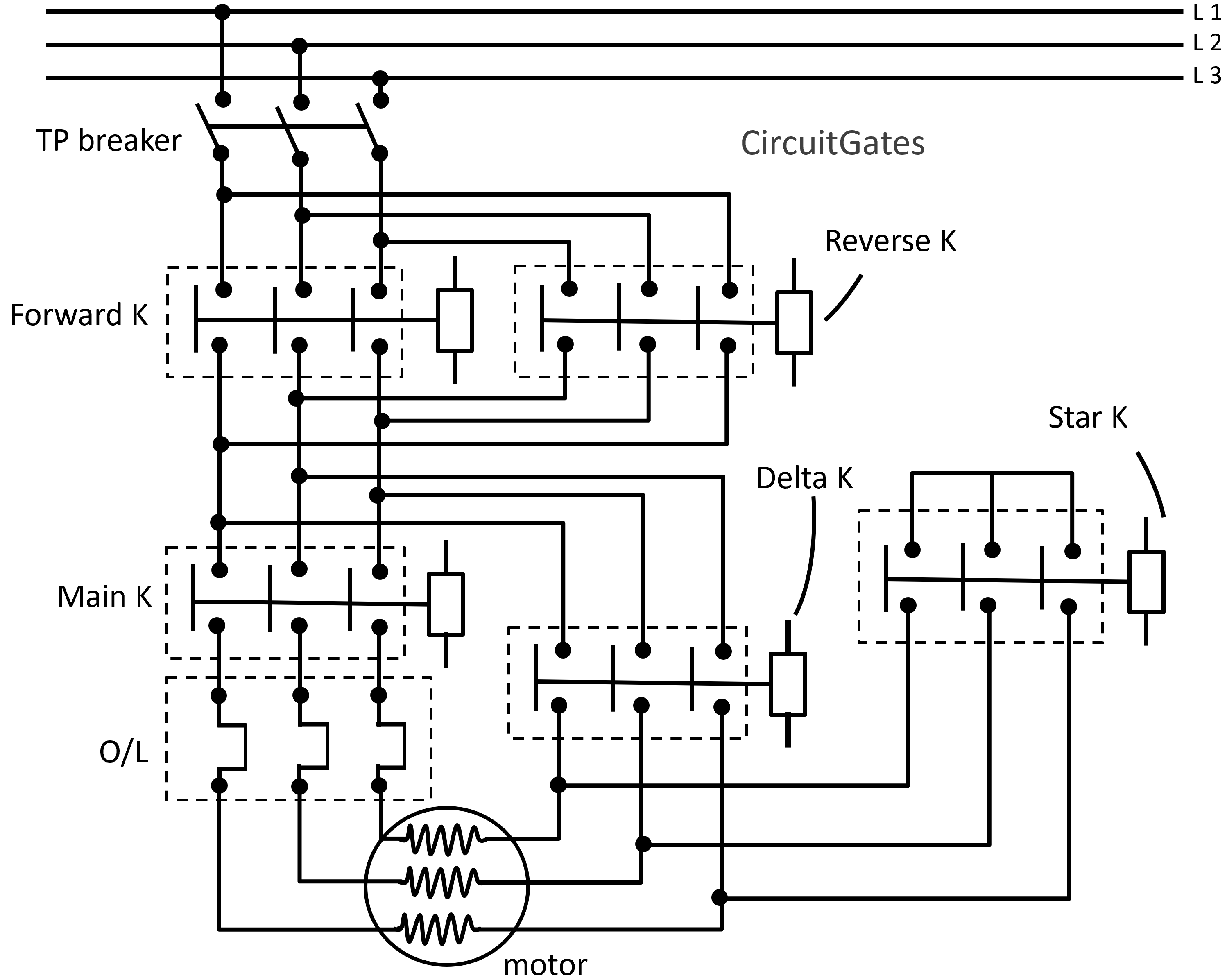
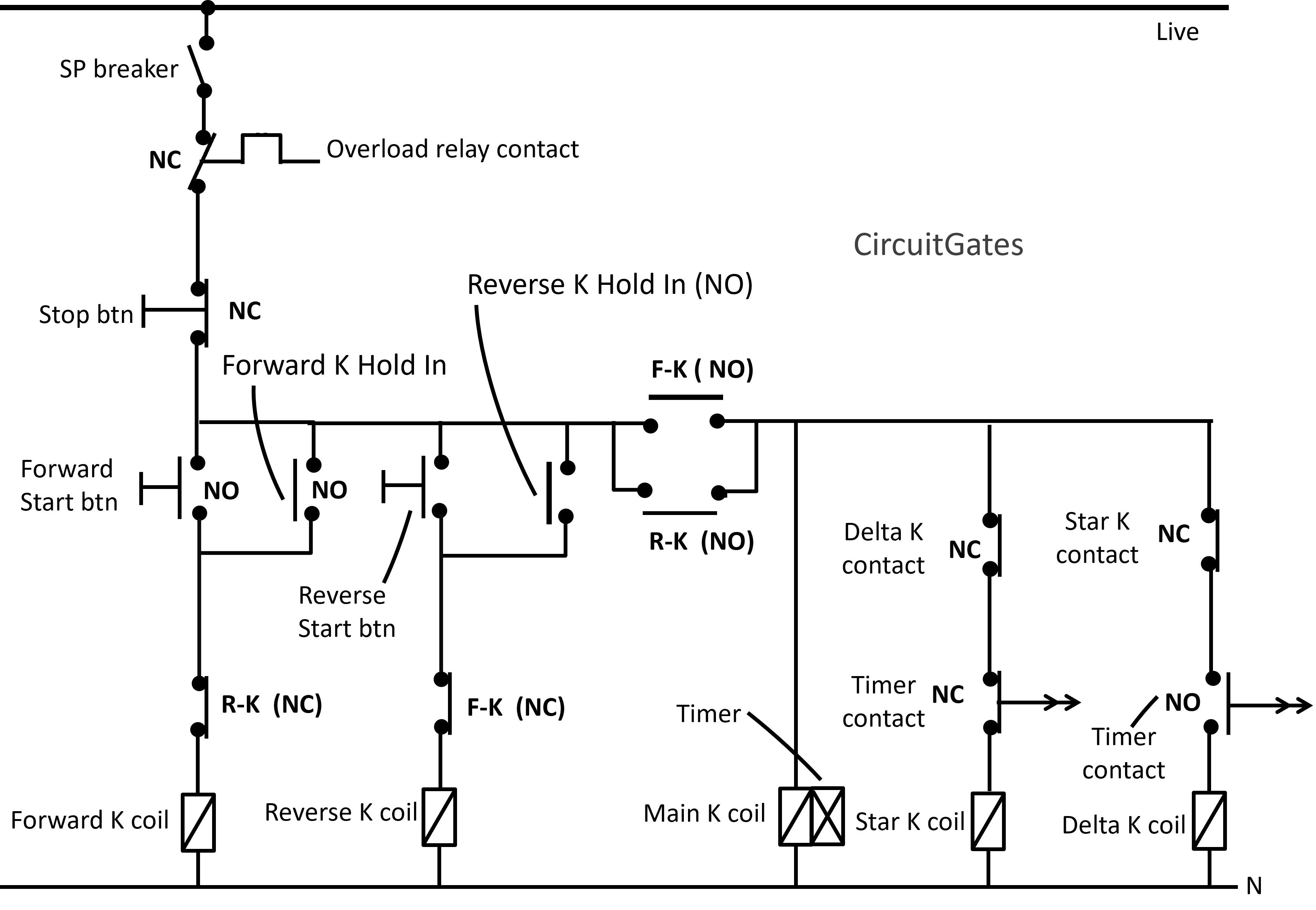
The diagrams below show the star-delta starter forward and reverse power and control circuits.
Power Circuit
Control Circuit
- TP Breaker - Tripple pole breaker
- SP Breaker - Single pole breaker
- K - Contactor
- btn - Button
- NC - Normally closed
- N - Neutral
- O/L - Overload relay
- NO - Normally open
- F-K - Forward contactor
- R-K - Reverse contactor
Key
Components of a Star-Delta Forward and Reverse Starter
The power circuit of the star-delta forward and reverse starter shown in the previous diagram consists of a triple pole circuit breaker, a main contactor, an overload relay, a forward contactor, a reverse contactor, a delta contactor and a star contactor.
The control circuit consists of a single-pole circuit breaker, a stop button, a forward start button to start the electric motor in the forward direction, a reverse start button, and a timer for switching the electric motor from star to delta.
Circuit Breakers
These are devices used to break the circuit when doing maintenance, or they automatically break the circuit in the event of a short circuit or overload.
Overload Relay
An overload relay is a device used with an electric motor triple pole circuit breaker that provides only a short circuit protection, not overload protection. In this type of circuit breaker, the overload relay provides overload protection.
Contactors
These are devices that close their normally open contacts and open their normally closed contacts when current passes through their coils.
Start Buttons
These are devices that are pressed to run the electric motor
Stop Buttons
These are devices that are pressed to stop the electric motor
How a Star-Delta Forward and Reverse Starter Works
On a star-delta forward and reverse starter, to start the electric motor in forward, the forward start button is pressed. When the forward start button is pressed, current flows through the forward contactor coil.
As current flows through the forward contactor coil, the coil becomes energized.
The energized coil pulls the power contacts and other normally open contacts of the forward contactor to the closed position, including the normal open contact labeled "F-K(NO)", and normally closed contacts of the forward contactor to the open position.
The contact labeled "F-K(NO)" allows current to reach the star-delta part of the control circuit.
As current flows through the main contactor and star contactor coils, their coils pull the power contacts and normally open contacts to the closed position and normally closed contacts to open position.
This results in power reaching the electric motor in star and the electric motor begins to run in forward direction.
After a preset timer time has reached, the timer opens the control circuit contact connecting the star contactor coil and closes the control circuit contact connecting the delta contactor coil.
This stops current from flowing through the star contactor coil while allowing current to flow through the delta contactor coil.
When current stops flowing through the star contactor coil and starts flowing through the delta contactor coil, the star contactor coil is de-energized while the delta contactor coil is energized.
This causes the star contactor power and other contacts in the closed position to open and vice versa for the delta contactor and the electric motor begins to run in delta in the forward direction.
We have already covered how a star-delta starter works; check out the explanations for further details.
To start the electric motor in reverse, we first need to stop the electric motor using the stop button, if it is still running in the forward direction and then press the reverse start button.
When the reverse start button is pressed, what happens is just the same as what we have said in forward direction except that the reverse components such as reverse start button and contactor are now in action.
When the reverse start button is pressed, current flows through the reverse contactor coil.
As current flows through the reverse contactor coil, the coil is energized and pulls the power contacts and other normally open contacts of the reverse contactor to the closed position, including the normally open contact labeled "R(NO)" and normally closed contacts of reverse contactor to open position.
The contact labeled "R-K(NO)" allows current to reach the star-delta part of the control circuit and the electric motor begins to run in reverse direction.
The contacts labeled R-K(NC) and F-K(NC) are for interlock, they prevent the electric motor from accidentally switching between forward and reverse directions.
The "Delta K contact" and "Star K contact" on the control circuit diagram prevent the electric motor from accidentally switching between star and delta configurations.
Forward and Reverse Starter Applications
A forward and reverse starter enables an electric motor to change the direction of rotation without rewiring the circuit. It is commonly used in industrial applications, including:
Conveyor Belts
Conveyor belts are used to move materials from one place to the other, such as loading and offloading raw materials or products from trucks.
A forward and reverse starter enables a conveyor belt to load a truck in the forward direction, and to reverse the conveyor belt direction when offloading a truck.
Hoist / Crane
This is equipment commonly found in industrial sites that moves materials from one place to another using a forward and reverse starter.
As they move back and forth, they require an electric motor to change direction of rotation.
Newsletter
Never miss a chance to learn something new with CircuitGates, subscribe to our newsletter
By subscribing, you agree to our Terms of use and Privacy policy.