Capacitance and Factors Affecting Capacitance Explained
Electrostatics
Electrostatics is the study of charges at rest or the interaction of stationary charges.
What does it mean to say stationary charges or charges at rest?
In other words, if a body with an excess of electrons is suspended in air where its excess electrons or charges have nowhere else to go, these charges are said to be stationary.
In electrostatics, we are studying these charges, how they behave among themselves inside a body and also with other charged bodies near them.
- Like charges of electricity repel each other, whereas unlike charges attract each other.
- The force of attraction or repulsion between two electrically charged bodies is directly proportional to the magnitude (amount) of their charges and inversely proportional to the square of the distance separating them.
There are two laws of electrostatics that are:
The Relationship Between Electrons, Protons and Electric Charges
Protons and electrons carry electric charges. Protons carry positive charges, whilst electrons carry negative charges. If a body somehow loses electrons, it becomes positively charged since the body is left with more protons than electrons.
On the other hand, if a body gains electrons, it becomes negatively charged since the body has more electrons than protons. The total deficiency or excess of electrons in a body is its charge.
We usually talk about electrons because protons can't move; they are contained inside the nucleus of the atoms of a body.
When a body contains an equal number of electrons and protons, the charges on protons and electrons cancel each other and the body is said to be neutral.
There are various ways in which a body loses or gains electrons, which include rubbing two bodies of different materials that have a different ability to give up electrons and connecting two parallel conducting bodies/plates to different potentials of a voltage source, e.g., a battery.
NB: - A body we are talking of is any material that is capable of gaining or losing electrons, such as a conductor.
When two neutral parallel plates or bodies are put close to each other, separated by air or other dielectric materials and connected to a source of voltage like a battery, as shown below. The amount of charge the plates can store is determined by their capacitance.
 Capacitance - is the property of two parallel plates that determines how much electric charge the plates can store corresponding to the voltage across them.
A device designed with a known value of capacitance or a device designed to introduce a known value of capacitance into a circuit, is called a capacitor.
There are various applications of capacitors which include smoothing of rectified AC voltage, power factor correction, etc. The following are factors that determine the capacitance of two parallel conducting plates or a capacitor.
Factors Affecting Capacitance
There are three factors that affect the capacitance of a capacitor: the type of dielectric material, the distance between plates, and the cross-sectional area of the plates.
These factors affect the capacitance of a capacitor by determining how many electric field lines can be established between its two plates.
1. Cross-Sectional Area (A)
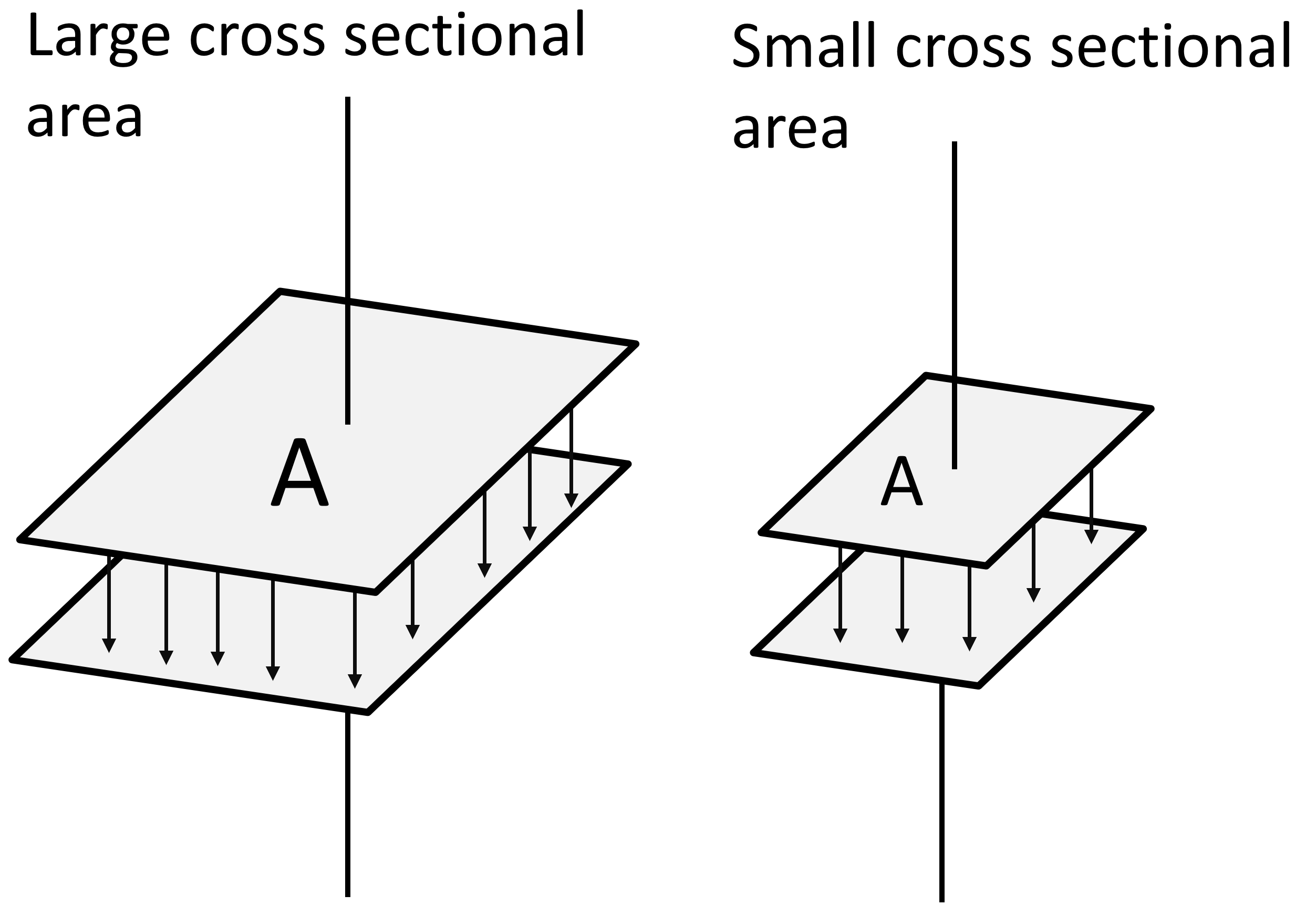
Capacitance varies directly with the cross-sectional area; that is, if the cross-sectional area of plates is increased, capacitance also increases.
This is because larger plates provide a greater space to store electric charge that is responsible for electric field formation. Therefore, as plate area increases, capacitance also increases.
2. Distance Between Plates (d)
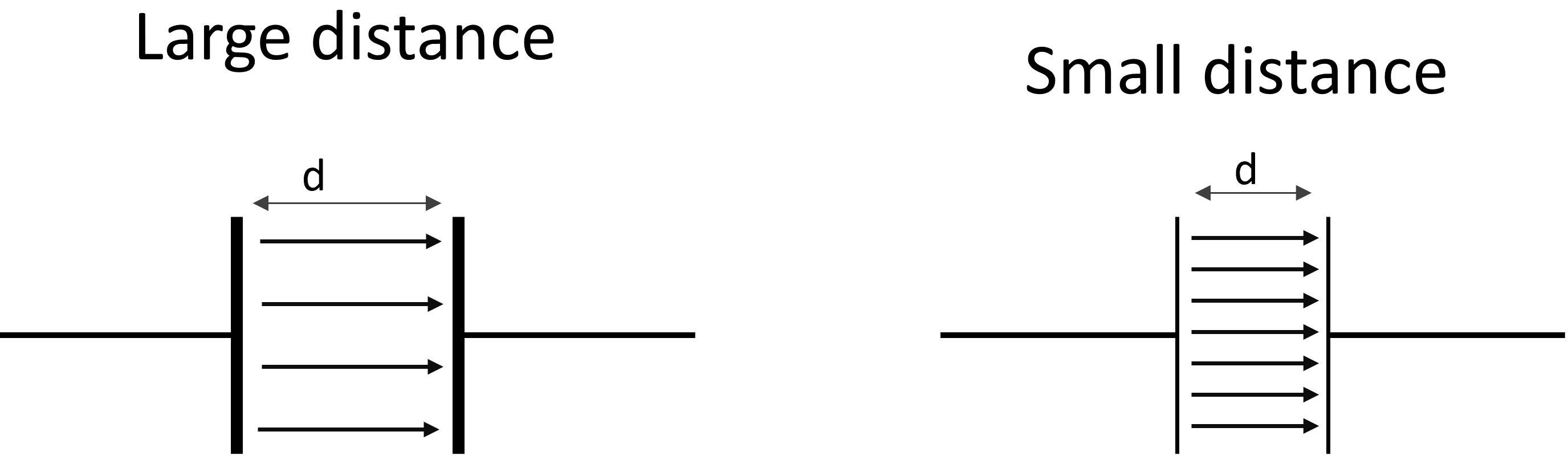
Distance between plates is also known as the dielectric thickness. Capacitance varies inversely with the distance between plates; that is, when dielectric thickness is increased, capacitance is reduced.
This is because a large space between two parallel plates offers more opposition to the formation of an electric field.
3. Dielectric Material
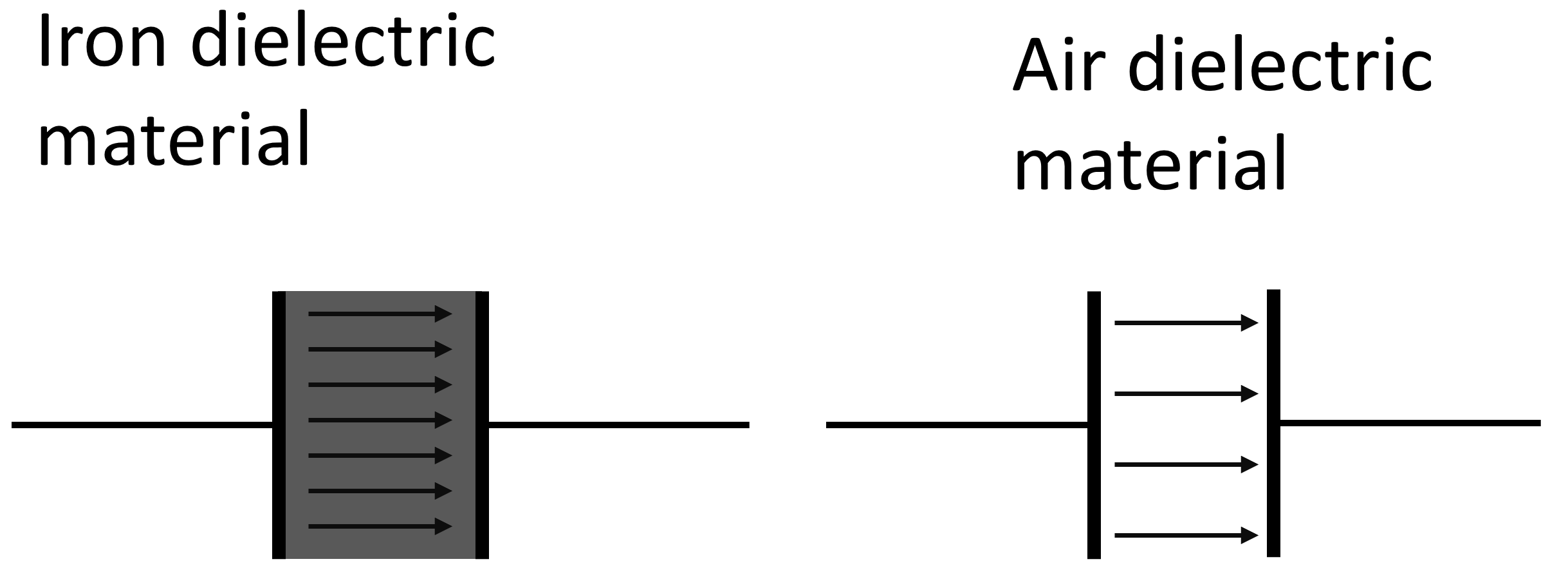
The dielectric provides an easy establishment of an electric field while preventing excess electrons from directly moving from one plate to the other.
There are several materials used as dielectrics, such as air, mica, and paper.
Capacitance of a capacitor depends on the dielectric material used.
Materials for dielectrics are measured based on permittivity. Permittivity is the ease with which an electric field can be established through a material. The larger the permittivity value, the larger the capacitance.
To get the actual capacitance of a capacitor, we combine the three factors in the following formula. Capacitance is equal to cross-sectional area multiplied by absolute permittivity (Er.Eo), all over distance between plates.

Example
A capacitor has plates with an area of 0.12m^2 and the plates are 1m apart, separated by air. Calculate its capacitance?
If you have made it this far, you have made it. Consider visiting our YouTube channel; we have helpful electrical tutorials there.